INNOVATIONS
Moving ultra-heavy Tunnel Boring Machine (TBM) components through constricted underground tunnels poses a classic engineering dilemma: How do you transport massive, high-tonnage assemblies over extended distances without spending weeks installing miles of expensive, fixed rail infrastructure?
To solve this, HLI’s engineering team – led by concept engineer Radosław Wiatr—developed a Modular TBM Transportation Concept designed to streamline underground assembly logistics, drastically cut setup times, and minimize equipment footprint.
The biggest operational challenge is that TBM cutterheads, drives, and trailing gear are among the heaviest single-piece loads moved in underground construction. Standard transport methods face critical limitations:
- High Infrastructure Costs: Installing permanent, continuous heavy-duty rail tracks through the entire tunnel length requires massive capital and labor investment.
- Tight Spatial Clearances: Narrow tunnel profiles leave little room for traditional heavy transport vehicles or SPMTs.
- High Frictional Resistance: Dragging multi-ton loads across rough ground or temporary steel plates demands excessive force and risks structural damage.
The modular transportation concept we’ve developed fundamentally rethinks how heavy loads interact with their supporting track:
-
Strand Jack Driven Power System
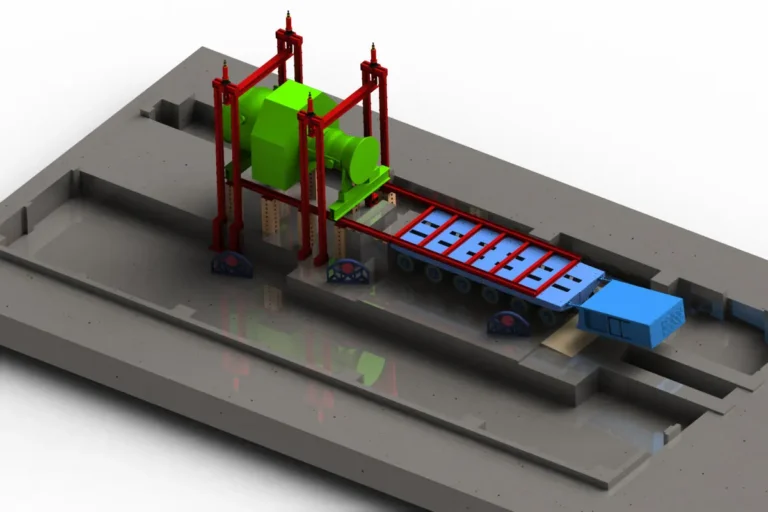
Instead of relying on heavy locomotive engines, pulling power is supplied by high-capacity strand jacks installed at the rail termini.
- Scalable Mass: Capable of moving ultra-heavy loads over long distances without vehicle size constraints.
- Flexible Rail Integration: Operates smoothly on tracks with or without integrated vertical lifting systems and guide rollers.
-
Low-Friction Sliding & Rolling Dynamics
Transport trolleys ride on dedicated skidding platforms or specialized roller assemblies.
- High Efficiency: Resistance forces are kept below 10% of total load mass, drastically reducing the required pulling force and stress on structural anchor points.
-
Self-Advancing Modular Rail System
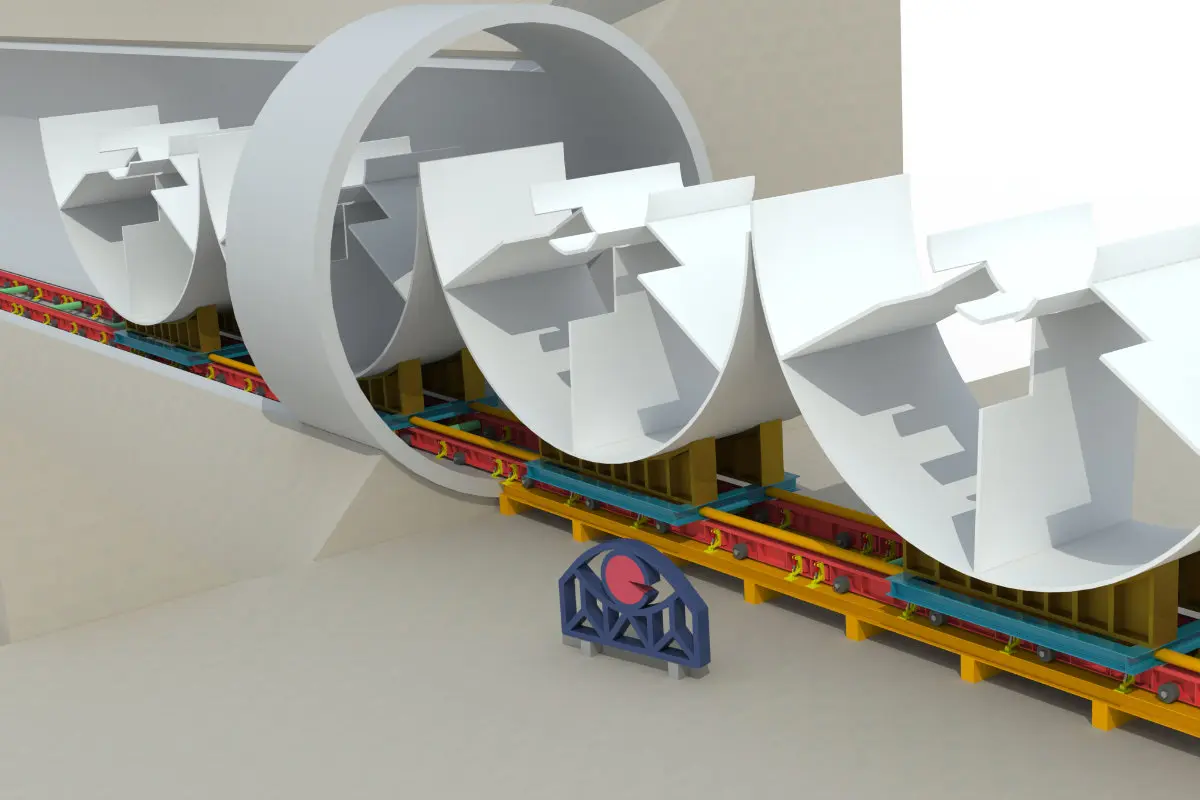
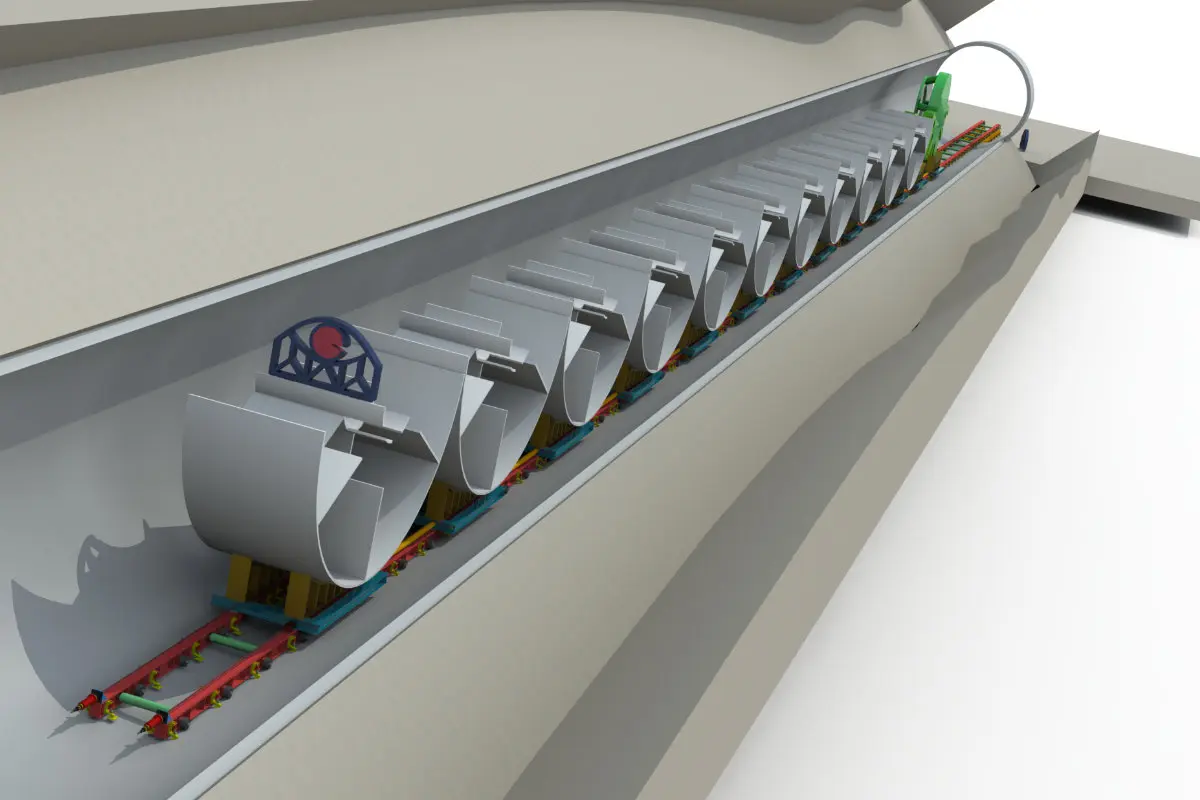
Rather than laying continuous track through the entire tunnel length, the system uses custom-length, reconfigurable rail segments:
- Hydraulic Elevation: Transport trolleys are equipped with extendable hydraulic feet that lift the trolley body off the track.
- Cyclic Advancement: Once the load is elevated, integrated hydraulic feet and rollers switch the rail section itself into movement mode, advancing the track segments forward in continuous cycles as the load progresses.
-
Minimal Exterior Footprint
- Streamlined Portal Exit: Once TBM components exit the tunnel portal, they are collected directly by an overhead or mobile crane.
- Immediate Dismantling: Trolleys and rail segments are rapidly disassembled, reducing the outdoor staging footprint and eliminating the need for extensive road preparation outside the tunnel entrance.
Transformative Impact on Tunnelling Projects
By combining strand jack pulling power with a self-advancing modular track, this concept eliminates the need for miles of permanent underground rail installation. The result is a faster, cleaner, and significantly more cost-effective logistics workflow for underground assembly and maintenance operations.
Engineering Credit: Concept design by Radosław Wiatr, Engineering Team at HLI.